The Problem with Sitting & 1 Quick Solution

If you’re in my classes, you’ve heard me talk about how we humans are designed to move, not sit for hours on end.

Dr. James Levine, director of the Mayo Clinic-Arizona State University Obesity Solutions Initiative and inventor of the treadmill desk, is credited with coining the phrase “sitting is the new smoking.” Just Google the phrase and you’ll find a slew of recent articles invoking it. This Huffington Post blog sums up Dr. Levine’s findings nicely.

Check out the cool TED animation below making the same point. Murat Dalkilinç gives the lesson: the animation’s by Oxbow Creative.

What the video doesn’t mention: most chairs are designed to tilt us behind our sit bones. Check your own: is it pulling you back into a slump? Or encouraging you to sit erect? Is your pelvis free to tilt in any direction?

What can you do, if you have a desk job? One simple solution: set an alarm for every 30 min. or so. When it rings, stand up for a moment. Shift your weight from side to side, back to front. Compare how you feel when you come back to sitting: perhaps more alert?

Pelvic Health

Here’s an informative blog I discovered about the value of freeing your pelvis. It’s especially important to address pelvic health when you consider how much we sit in contemporary life. A sedentary lifestyle is antithetical to a freely moving pelvis.

Lise Wood of Women's Health Foundation

Lise Wood of WHF

On the fundamental properties of good movement, Lise Wood of the Women’s Health Foundation writes: “If the body forms angles to the main line of action, some of the force generated by the pelvis will become absorbed in the tissues and fail to be transmitted toward the goal of the movement. The tissues that absorb this force may be the muscles, ligaments, tendons or the joint itself.”

In other words, when movement travels optimally through our skeletons, it follows the lines of our bones. The pelvic muscles—the biggest of the body—can do their job efficiently. If force is absorbed in the tissues, over time this can lead to inflammation and joint instability. This applies to both women and men.

Read the rest of her blog here.

Core Principles of Feldenkrais: Norman Doidge’s Perspective

Adapted from The Brain’s Way of Healing by Norman Doidge, MD, 2015, pages 168-176.

How the Feldenkrais Method facilitates neuroplastic healingThe cover of The Brain's Way of Healing by Norman Doidge, MD

1. The mind programs the functioning of the brain.

We are born prepared to learn. We can adapt our brains and movement to particular surroundings. Even when we damage our brains, usually plenty of brain remains to take on damaged functions.

2. A brain cannot think without motor function.

Just thinking of a movement triggers that movement, changes tone in that part of our body. Using our brains triggers four components: motor movement, thought, sensation, and feeling.

3. Awareness of moving is the key to improving movement.

Doidge writes: “It may seem ‘magical’ to think that movement problems. . . can be radically changed simply by becoming more aware of the movement, but it seems magical only because science formerly thought of the body as a machine with parts, in which sensory functions are radically separated from motor functions.”

4. Differentiation—making the smallest possible sensory distinction between one movement and another—builds brain maps.

5. Differentiation is easiest to make when the stimulus is smallest.

The less effort we use, the more we can notice. If you’re lifting a piano, you won’t notice if a fly lands on it; if you’re lifting a feather, you will.

6. Slowness of movement is the key to awareness, and awareness is the key to learning.

If you leap too quickly, you can’t look before you leap.

7. Reduce effort whenever possible.

If you are straining, you aren’t learning: if strain, no gain. No pain is gain.

8. Errors are essential, and there is no right way to move, only better ways.

If you don’t make mistakes, you won’t learn. No one speaks her native language perfectly from day one.

9. Random movements provide variation that leads to developmental breakthroughs.

Sometimes it’s useful to wander!

10. Even the smallest movement in one part of the body involves the entire body.

When you’ve got a ball of yarn, whichever part of the yarn you take hold of, the whole ball comes along eventually.

11. Many movement problems, and the pain that goes with them, are caused by learned habit, not by abnormal structure.

Often there’s nothing to “fix.” Improvement can come from changing your movement patterns.

About Norman Doidge, MD

Norman Doidge, M.D., is a psychiatrist, psychoanalyst, researcher, author, essayist and poet. He is on faculty at the University of Toronto’s Department of Psychiatry, and Research Faculty at  Columbia University’s Center for Psychoanalytic Training and Research, in New York. He is the author of two New York Times bestselling books on neuroplasticity. Learn more about Dr. Doidge on his website.

Feldenkrais Demo in Cedars Open Studios

The Cedars neighborhood houses dozens of artists and art-related businesses. Come Saturday, Nov. 22, for this annual event (and add it to your calendar for next year—always the Saturday before Thanksgiving). This is the neighborhood I’m delighted to call home, just south of downtown and I-30, between I-35 and I-45.Map of Cedars Open Studios

You’ll discover artists working in many media: ceramics, glass, wood, paint and more. Find some holiday gifts for family (or yourself!).

I’m teaching a free Awareness Through Movement® demo at Divine Sight Healing Arts from 12 to 1. There’ll be two short lessons, with time in between for discussion. Come explore your physical self with the Feldenkrais Method®, or bring that friend you’ve been wanting to introduce to the method! Snacks! Divine Sight is at 1320 Griffin St. East, Dallas, TX, 75215.

Demonstrations all day long at Bowman Glass Arts, Dallas Heritage Village, Ham Hula T-Shirt Co., Born Below, and more. Fun for the whole family!

And when you’re ready for refreshments, stop by Full City Rooster (freshest of coffee) or Lee Harvey’s (wonderful veggie sandwiches). Plus all the studios will be offering treats.

The 12th annual Cedars Open Studios runs from noon to 6 pm. All locations on the tour have maps. Visit the event website for more info about participating artists and businesses.


Common Mistakes in Awareness Through Movement® Classes

I’ve been reflecting on whether it’s possible to make mistakes in Awareness Through Movement®. It’s not necessarily self-evident. This modality is about self-discovery. So, from one point of view, whatever you discover is great.

ATM student explores how her spine moves.

ATM student explores how her spine moves. Photo: Henry Biber.

From another point of view, you could say it’s possible to make errors. Perhaps a better way to say it is, it’s possible to create obstacles for yourself and make your class a lot less fun. Below are five ways students often create obstacles.

1. Being in a hurry
Awareness Through Movement (ATM® ) works by allowing your nervous system to distinguish differences. Which entails beginning a class/lesson with small, slow movements, so that you can attend to how you are doing a movement sequence. Newcomers make big, quick movements, which mean they follow their habitual patterns, moving the way they always do. When they learn to slow down, they can sense changes. Yes: the slower and smaller your movements, the more you’ll change. At first, it’s counter-intuitive. Try it and see what you discover.

2. Expecting change to happen overnight
Usually students try out the Feldenkrais Method® because there’s something they’d like to improve. Maybe they’re recovering from an injury, like a sprained knee. Often they come because of chronic pain—low back or neck. They come for one class or maybe a series, don’t notice a big change, and drop the whole thing. If your condition is chronic or acute and you’ve been living with it for months or years, six classes will not make a big difference. But six months of classes could. I speak from experience: I’ve used Feldenkrais to resolve my own neck spasms, to recover use of my knee following surgery, and to relieve sciatica. In each case, it took time, but the results are long lasting.

3. Being hard on yourself
New students think that there’s a perfect way to do each movement. Sometimes they get frustrated or angry with themselves if they don’t understand what the sequence is calling for. For example, there are lessons in which you roll your eyes in one direction as you move your head in another, Or close one eye. The point of this isn’t to become perfect at doing the sequence, but to show you your habits, and give you more choices. It’s hard for adults to allow themselves to fail at something, even when no goals are set by the teacher. Even when “failing” means that you’ve discovered something you don’t yet know about yourself. (Could you feel curious and interested instead of irritated?)

4. Forgetting to breathe
It’s extremely common in our culture to hold your breath when exploring a new movement. I’m continually reminding students to notice their breath, to let it be uninterrupted, to create space between their teeth. Sometimes I’ll invite them to notice if a movement is simpler/easier if you inhale as you begin or exhale. More and more, you begin to realize that breath can be independent of movement: there are Awareness Through Movement lessons which are specifically about discovering that.

The joy of self-discovery

The joy of self-discovery

5. Taking the whole thing too seriously
In the end, our goal is self-discovery with Awareness Through Movement. So there’s no need to clench your teeth, or strain or stretch. I ask students, could you make this movement luscious? Or, I remind them, it’s not about being perfect: it’s about discovering your physical self. It’s about returning to the joy of self-discovery we all experienced as children. And then dropping it when you’ve had enough, just like a baby.

Introduction to Qigong Aug. 17

Please come to this introduction to Zhineng Qigong (Chi-Lel Qigong), taught by Rick Silver. Learn movements and techniques taught in China’s medicine-less hospitals that promote health and increase energy and awareness.

Rick Silver, Qigong teacher

Instructor Rick Silver

When: Sunday, Aug. 17, 2-3:30 pm

Where: OmBalance, 6801 Snider Plaza, #240, University Park (near SMU)

Movements range from easy to moderately challenging, depending on your fitness. They do not require athleticism and can be done standing or sitting.

These exercises massage and strengthen you internally while conditioning structure. They are helpful to do while recovering from illness.

Possible Benefits of Regular Practice

  • Improved blood pressure, both high & low
  • Improved energy, blood & lymph circulation

If there’s interest, Rick will offer a six-class series at OmBalance.

Intro class is $10. Register in advance on Brown Paper Tickets, or bring check or cash: credit cards not accepted.

ABOUT RICK SILVER

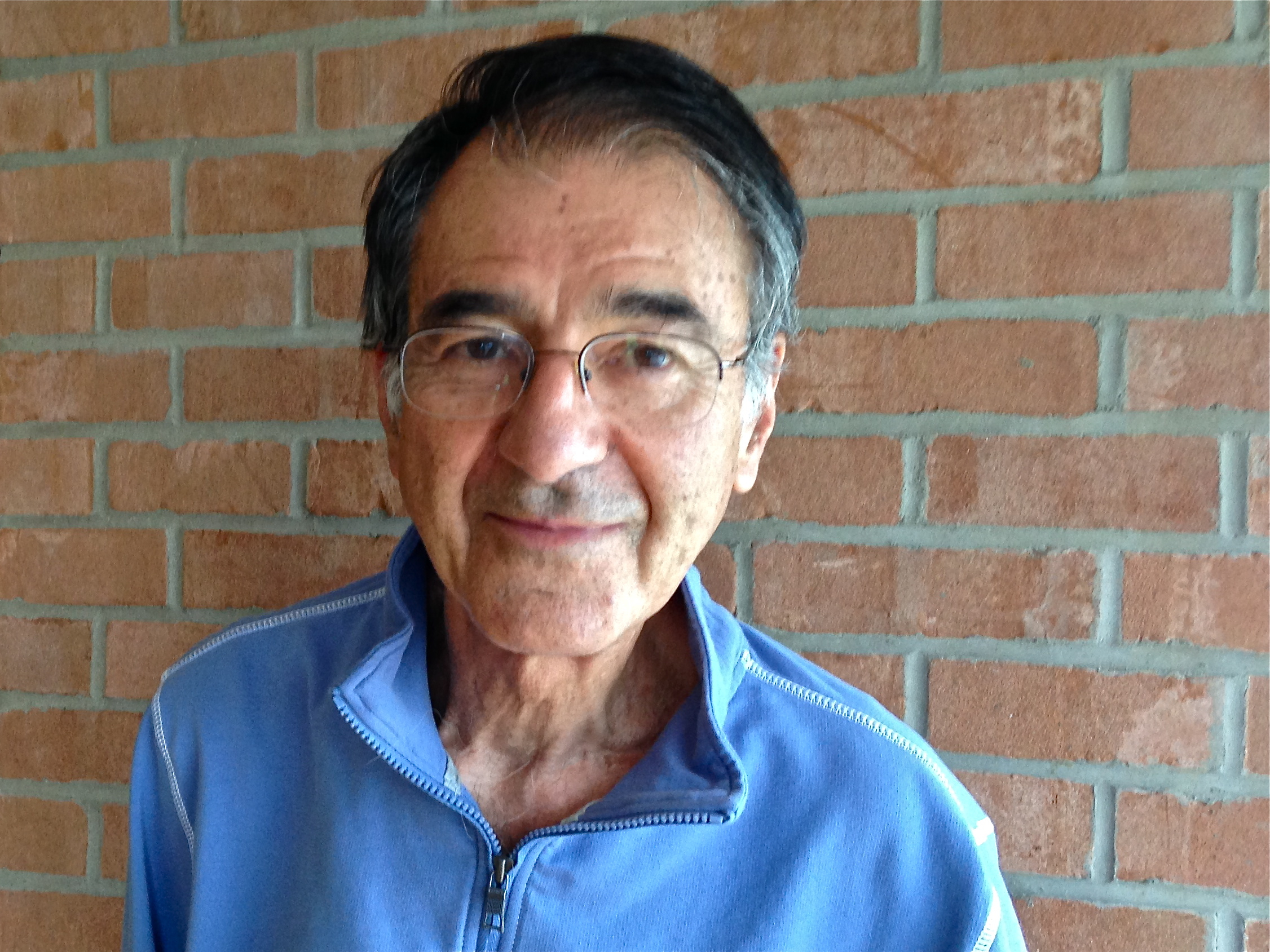
In 1995 Rick was diagnosed with Chronic Fatigue Syndrome. Western medicine and multiple alternative modalities did not relieve his symptoms. He began practicing Zhineng (Chi-Lel) Qigong in 2001, while living in Santa Fe. Since then he has been symptom free and in excellent health. In 2004 Rick and his family moved to New Zealand, where he continued his practice. He studied with Sandy Jiang (Blue Sky Zhineng Qigong Studio) and became certified to teach. Rick is in his 70s, has a 17-year-old daughter, and lives in Dallas. He is medication free.

For information call Rick at 505-819-8964 or email rickinsantafe@gmail.com.

*Consult your health care professional before starting any wellness program. The instruction is not a substitute for professional medical advice.

Many Pillows for Sound Sleep

Do you wake up frequently during the night? Or awaken in the morning with a stiff shoulder from sleeping on your side? For sound sleep, try multiple pillows.

Years ago, both the physical therapist and the Feldenkrais practitioner I was working with for shoulder spasms recommended that I sleep with more than one pillow. I tried it and discovered that I would frequently sleep through the night. I awakened more refreshed. I’ve also found that, when I travel and have just one pillow, it’s much harder to fall asleep. And I wake up feeling like I’ve been working all night—which, of course, I have. (Yes, towels can help in a pinch.)Sound sleep with many pillows

The idea is that you arrange your pillows so that your limbs and head are completely supported in whatever position you choose for sleeping. Restorative yoga is based on the same concept.

I have been asked about sleeping with one giant pillow. I’ve not tried that, because I prefer to place my pillows precisely.

I’ve also been asked by clients, what about my partner? I’m betting she or he will understand, if it means you sleep better. Who knows? They might follow your example.

Below are suggestions for how to deploy your pillows. Try them, and please let me know how it works for you.

Back Sleeping

  • a pillow under head so neck aligns with the rest of your spine (you might not need this—if you’re comfortable without a pillow, don’t use it)
  • a pillow under each forearm and hand, that is, one pillow for your left arm, one for your right
  • a long firm pillow supporting your knees

Side Sleeping

  • a pillow under your head so your neck aligns with the rest of your spine— it’s likely this will need to be higher than when you’re sleeping on your back
  • a thin pillow under your side, if you’re a woman, to keep pressure off your shoulder and hip (most men won’t need this, as their hips are more narrow)
  • a long, firm pillow between your knees
  • a tall, firm pillow supporting your top arm

Stomach Sleeping

  • If your head is turned to the side, try a pillow under the arm on that side


Free Feldenkrais Demo at MoveStudio Jan. 25

I’m offering a free Feldenkrais demo this Saturday, Jan. 25, in MoveStudio’s annual Open House. It’s an opportunity to sample various delicious modalities and excellent teachers.

I’m teaching a 20-minute chair lesson at 5:30. Please come: if you’re curious about the method, it’s the perfect time to try it. If you’re a regular, that’s also great, as I rarely teach chair lessons.free Feldenkrais demo The focus will be on freeing your torso: shoulders, ribs, and pelvis.

The Open House runs from 3-6:30. There’ll be snacks plus give-aways. You could win a private Feldenkrais lesson with me! Other demos: Nia with the wonderful Jule Aguirre of Jule in the Lotus, bellydancing, barre and more. The whole schedule’s online.

Awareness Through Movement® South of LBJ

Do you work or live south of I-635? There are two Awareness Through Movement® series starting next week easy for you to reach. Choose the lunchtime series just south of downtown or the evening series near SMU.

Awareness Through Movement coming up at South Side on Lamar

Tsada Yoga is located in a beautiful loft on the 7th floor of SSOL.

Do you live or work close to downtown? Sign up for the four-class lunchtime series at Tsada Yoga, Nov. 7 through Dec. 5, noon to 1 pm. Note: we’ll skip Thanksgiving. Limit: 10. Tsada is in South Side on Lamar, close to The Cedars DART stop. Register on Tsada’s website.

Awareness Through Movement coming up in Snider Plaza

OmBalance is located on the 2nd floor of this building.

If the SMU area is more convenient, sign up for the four-class series at OmBalance in Snider Plaza. We’ll meet from 7 to 8 pm, Nov. 7 through Dec. 5, skipping Thanksgiving. Register via Brown Paper Tickets.


New Location: Private Feldenkrais® Lessons in Snider Plaza

Where OmBalance is housed. Come up to the 2nd floor to find my studio.

Where OmBalance is housed.

I’m delighted to announce that, effective Friday, September 20, I’ll be teaching Functional Integration®, the hands-on version of the Feldenkrais Method®, in a new location: OmBalance, a beautiful space in Snider Plaza, in the Park Cities. It’s on the 2nd floor, next to Serving Life Chiropractic; there’s a elevator.

Appointment Schedule

  • Tuesdays, 11 am- 5 pm
  • Fridays, 11 am- 8 pm

OmBalance was founded and is operated by Cheryl Johnson. It’s a collection of wellness services for those who seek a conscious life. Services include a variety of yoga classes to meet all Private Feldenkrais® Lessons in Snider Plazagenerational needs, specializing in classes for fertility, prenatal, partner and seniors. OmBalance also offers  childbirth education, doula service, nutrition and meditation. Cheryl has cultivated over a decade of holistic expertise working with her clients as a yoga instructor, certified childbirth educator and doula.

I’m looking forward to offering an Awareness Through Movement® series there this fall: stay tuned!


View Larger Map