When you’re living with pain, you may have been told by health professionals who can’t find a physical cause: “It’s in your head.”
Does that sound familiar?
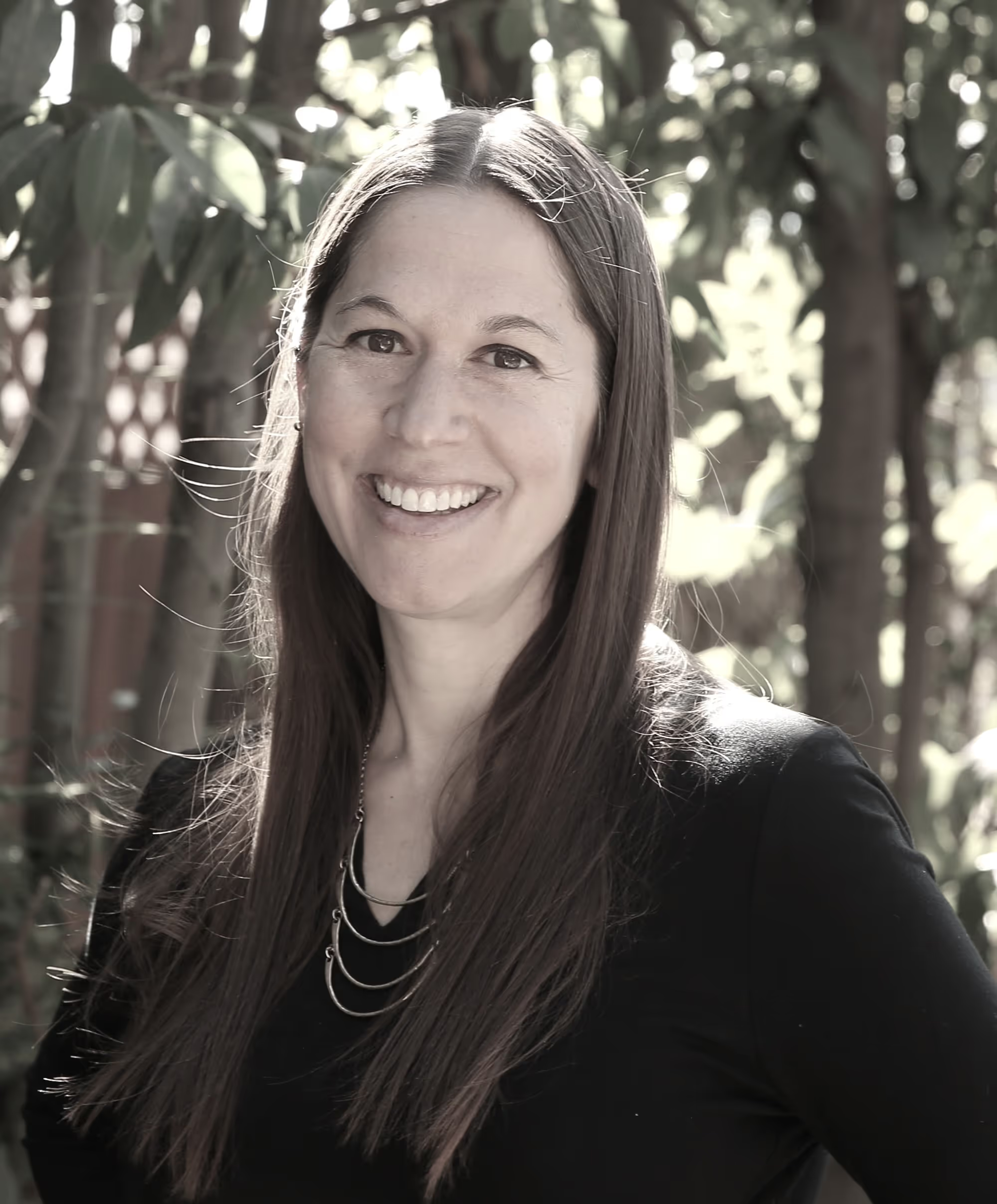
Pain psychologist Rachel Zoffness, PhD
Well, it turns out, that’s the case, at least partly. Pain psychologist Rachael Zoffness says pain is at “the intersection of everything…. pain is never purely physical, it’s also emotional. And it’s not located in the body, ultimately, it’s produced by the brain.”
Knowing that is both incredibly exciting—because we have the power to change how we think and feel, and the tools exist to help us—and disheartening, because many medical professionals don’t know how to best treat pain.
Dr. Zoffness’ first patient was a teenager who’d been living with pain so long he’d given up hope. She says:
“… this was a child, and he was on Thorazine for his pain, and it would knock him out for days at a time. So, he wasn’t going to school, he wasn’t seeing friends, he wasn’t functioning… He’d seen more than 15 physicians… And I knew, especially as a pain psychologist, nobody wants to go to a psychologist for pain because pain is sold to us as this purely physical or physiological problem. If you go to a psychologist, the popular thought is, ‘Oh, they’re saying it’s all in my head, or they’re saying my pain isn’t real or I’m faking it.’ But that’s not true; there’s all these treatments that are evidence-based for pain that are non-pharmacological.”
Using one of these evidence-based treatments, the cognitive behavioral therapy protocol for pain management, Dr. Zoffness was able to help this hopeless student move out of pain into first standing on his porch and eventually into playing soccer and graduating from high school. “He still has pain episodes, but he knows exactly what to do, and he’s never going to be that kid who’s in bed for four years ever again.” Her former patient is now captain of his college swim team.
 Where to learn more
Listen to this episode of the Ologies podcast to hear the whole interview: “Dolorology with Dr. Rachael Zoffness.” Or read the transcript here.
Dr. Zoffness has just published a book, which I’ve not yet read: Tell Me Where It Hurts: The New Science of Pain and How to Heal. And her website is packed with resources.
